The short answer
Choose a probiotic by matching it to your goal, then checking seven things on the label: named strains, prebiotic fiber included (a synbiotic), a capsule that protects the bacteria, clear storage instructions, a once-a-day dose you'll actually keep up, a GMP-certified manufacturer and a real money-back guarantee. Ignore the three things that get the most marketing attention: a sky-high CFU number, a long list of strains and miracle before-and-after promises. For everyday digestive, satiety and metabolic support, our pick is SodaTide, a once-a-morning synbiotic from $49 per bottle with a 60-day guarantee.
Why choosing a probiotic feels so confusing
Walk down the supplement aisle, or scroll a marketplace, and every bottle shouts a different number: 10 billion, 50 billion, 100 billion CFU. One lists 15 strains, another lists two. Some live in the fridge, others sit on a shelf. Some are "for women," some "for weight," some "for immunity." No wonder most people either grab the biggest number or give up.
Here's the thing the labels don't tell you: the microbiome is a community, and what matters is which bacteria you add, whether they survive the trip, and whether they have anything to eat when they arrive. Once you look at probiotics through that lens, the checklist gets short and the choice gets easy. (If the vocabulary is new to you, start with our plain-English guide to prebiotics, probiotics and synbiotics.)
Step one: name your goal before you read a single label
Probiotics are not one product; they are a category. A strain studied for travel diarrhea is not the same as one studied for the gut lining or appetite signals. So before anything else, write down the one thing you want help with:
- Everyday digestion and bloating after ordinary meals.
- Regularity that drifts between too slow and too fast.
- Appetite and satiety: feeling hungry again soon after eating, cravings that won't quit.
- Metabolic support as part of a weight-management routine.
If your goal is one of those four, you're reading the right site. Those are exactly the areas where a daily synbiotic fits, and the areas our review of SodaTide focuses on. If your goal is a diagnosed condition, that's a conversation for your doctor, not a buyer's guide.
The 7 things that actually matter
- 1. Named strains, not vague blendsA good label tells you the genus and species, such as Bifidobacterium infantis or Akkermansia muciniphila. "Proprietary probiotic blend" with no names means you can't look anything up. Named strains let you check that the bacteria match your goal.
- 2. Prebiotic fiber in the same capsuleBacteria need food. If the formula includes prebiotics such as chicory root inulin or resistant starch, it's a synbiotic, and the bacteria arrive with their meal packed. Since most American adults eat well below the roughly 25 to 38 grams of daily fiber the National Academies recommend, this matters more than people think.
- 3. A delivery format that protects the bacteriaLive cells have to get past stomach acid. Capsules designed for that job (and clear instructions to take them with water before a meal) beat gummies and powders stirred into hot drinks. We cover timing in the best time to take probiotics.
- 4. Honest storage instructionsSome strains are shelf-stable; others keep their potency best in the fridge after opening. Either is fine. What you want is a maker that tells you, because it shows they've thought about keeping the bacteria alive until the day you take them.
- 5. A dose you'll actually keep upThe best probiotic is the one you take every day for months. One capsule each morning is a routine almost anyone can keep. Three capsules spaced through the day, or a powder you have to mix, usually isn't.
- 6. Where and how it's madeLook for "manufactured in an FDA-registered, GMP-certified facility," ideally in the USA, plus plain statements such as non-GMO and vegetarian capsules if those matter to you. Supplements aren't pre-approved by the FDA, so the facility standard is one of the few quality signals you can check.
- 7. A real money-back guaranteeBecause gut changes take weeks, a 14-day return window is nearly useless. A 60-day guarantee that lets you actually finish a bottle or two before deciding is a sign the maker expects you to be happy, and it removes most of the risk from trying.
The 3 things that don't matter as much as the marketing says
| What the label shouts | Why it gets attention | What actually counts |
|---|---|---|
| "100 billion CFU!" | Big numbers feel powerful | CFU is a count of cells at manufacture, not proof they're the right strains or that they survive. Strain fit and prebiotic fiber do more than raw volume. |
| "15 strains in one!" | Looks comprehensive | Many of those strains are added in tiny amounts. A few well-chosen, named strains for your goal beat a long list of generic ones. |
| "Lose 20 pounds in 2 weeks" | It's what people hope to hear | No probiotic does that. Honest products talk about support for digestion, satiety and metabolic function, and tell you to give it 30 to 90 days. |
If a product leads with any of these three and is quiet about strains, fiber, storage and guarantee, that tells you where its priorities lie.
Common mistakes people make when buying a probiotic
- Buying the biggest CFU number and ignoring the strains entirely.
- Choosing a probiotic alone while eating a low-fiber diet, so the new bacteria have nothing to feed on. (This is the single most common reason people say "probiotics didn't do anything for me.")
- Quitting after a week. The microbiome shifts slowly; two weeks is not a fair trial.
- Taking it with hot coffee or at random times, which we explain in the timing guide.
- Falling for marketplace knock-offs. Reputable makers sell through their own site so the guarantee is real and the product is fresh.
A quick word on safety
Probiotics are well tolerated by most healthy adults, and mild gas or bloating in the first days is common as your gut adjusts. If you're pregnant, nursing, immunocompromised, take medication or have a medical condition, talk with your doctor before starting any probiotic or synbiotic. And if you have red-flag symptoms such as blood in your stool, unexplained weight loss or severe pain, see a doctor first; we list them in 8 signs of an unhealthy gut.
Putting the checklist to work: a 60-second label test
Pick up any bottle (or open any product page) and ask, in order:
- Can I read the strain names?Genus and species, spelled out.
- Is there prebiotic fiber in it?Inulin, resistant starch or similar.
- How do I take and store it?Clear, simple instructions.
- Where is it made?GMP-certified, FDA-registered facility.
- How long do I have to decide?Look for 60 days, not 14.
Five yeses and you have a product worth a fair 60-day trial. Here's the one that passed our test.
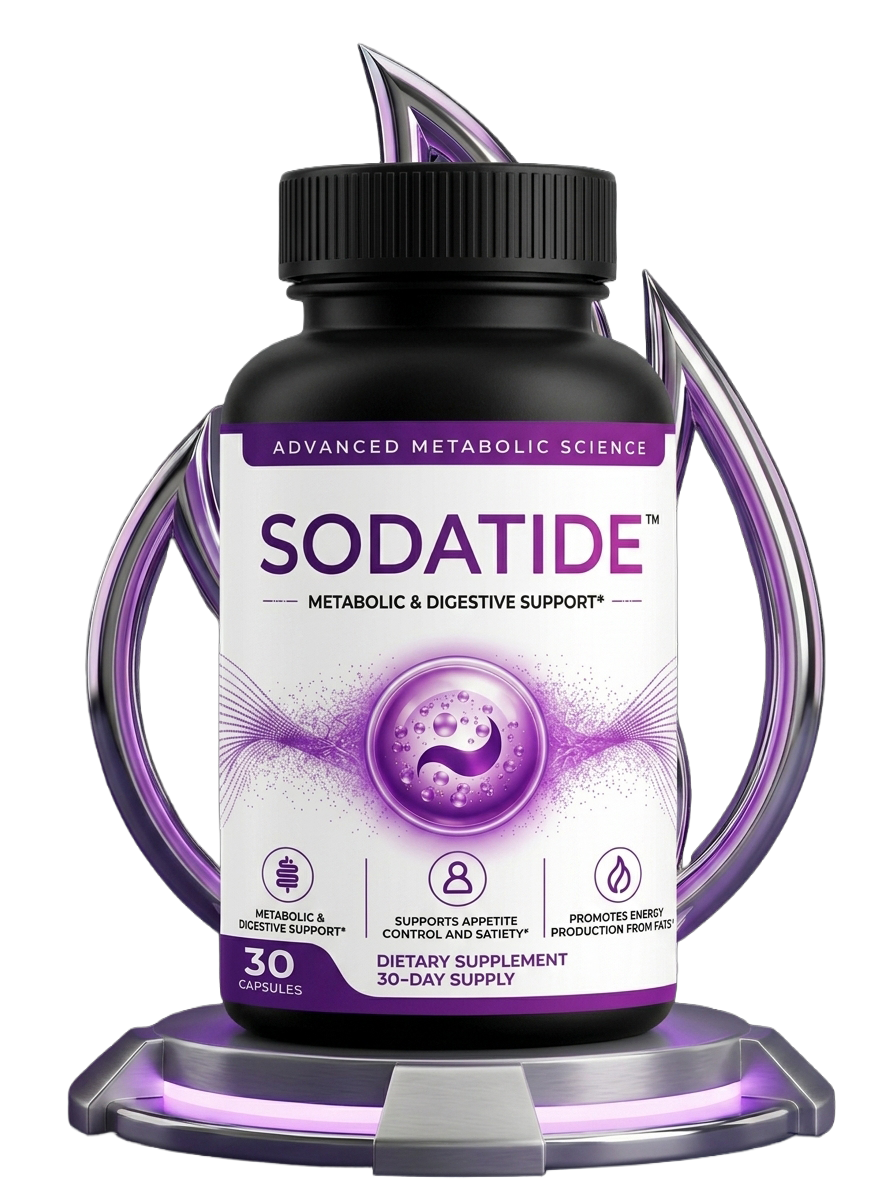
Our recommendation: SodaTide
Run SodaTide through the seven points above and it's easy to see why it's the option we recommend for everyday gut support. It was built to be exactly the kind of product this checklist describes.
- Named strains. The label lists Bifidobacterium infantis, Clostridium butyricum and Akkermansia muciniphila, a next-generation strain we explain in what is Akkermansia muciniphila?
- Prebiotics in the same capsule. Chicory root inulin (211 mg) and potato resistant starch (100 mg) feed the bacteria you already have and the ones you're adding. That makes it a true synbiotic, not a probiotic that hopes you ate your vegetables.
- Built around the four goals above. The label focuses on digestive and metabolic support, appetite control and satiety, which is precisely what most of our readers are looking for.
- Effortless routine. One vegetarian capsule a day with 8 oz of water, in the morning before a meal. Clear storage guidance (refrigerate after opening to keep the probiotics potent). No stimulants.
- Made properly. Made in the USA in an FDA-registered, GMP-certified facility, GMO-free.
- Pricing you can plan around, with a real safety net. 2 bottles at $79 each, 3 bottles at $69 each (most popular, free shipping) or 6 bottles at $49 each (best value, free shipping). One-time purchase, no auto-ship, free bonus guides on the 3- and 6-bottle kits, and a 60-day money-back guarantee, long enough to judge it fairly.
Give it at least 30 days of daily use, ideally two to three months. SodaTide is a dietary supplement that supports digestive wellness; it isn't a medication and doesn't replace medical care. For the full label breakdown, bonuses and our 4.7/5 verdict, read our SodaTide review or visit the SodaTide overview.
Frequently asked questions
What should I look for when choosing a probiotic supplement?
Start with the goal (digestion, regularity, appetite and metabolic support), then check that the label names the specific strains, includes prebiotic fiber to feed them (a synbiotic), uses a capsule that can protect the bacteria, states clear storage instructions, is made in a GMP-certified facility and comes with a real money-back guarantee. Avoid products that hide behind vague blends or impossible promises.
Does a higher CFU count mean a better probiotic?
Not necessarily. CFU (colony-forming units) tells you how many live cells were in the capsule, not whether they are the right strains for your goal or whether they survive the stomach. A well-chosen formula with the right strains and prebiotic fiber can do more for everyday gut support than a very high CFU count of generic strains.
Is a synbiotic better than a plain probiotic?
For most people looking for daily gut support, yes. A synbiotic combines probiotic bacteria with prebiotic fibers such as inulin or resistant starch, so the bacteria arrive with their own food. A plain probiotic depends entirely on the fiber already in your diet, which for most adults is far below the recommended amount.
Should a probiotic be refrigerated?
Follow the label. Some strains are shelf-stable; others keep their potency best when refrigerated after opening. A product that tells you clearly how to store it is a good sign that the maker has thought about keeping the bacteria alive until you take them.
How long should I try a probiotic before deciding if it works?
Give it at least 30 days of daily use, ideally two to three months. The gut microbiome changes gradually. That is also why a 60-day money-back guarantee matters: it gives you time to judge the product fairly before the refund window closes.
Why do you recommend SodaTide for daily gut support?
SodaTide ticks the boxes on our checklist: it names its three strains (Bifidobacterium infantis, Clostridium butyricum and Akkermansia muciniphila), pairs them with two prebiotic fibers (chicory root inulin and potato resistant starch), comes in one vegetarian capsule a day, gives clear storage instructions, is made in the USA in an FDA-registered, GMP-certified facility, and is backed by a 60-day money-back guarantee with one-time pricing from $49 per bottle.